Car keys belong in a signal blocking pouch or metal box in a room away from the front door at night, out of sight of windows and the letterbox.
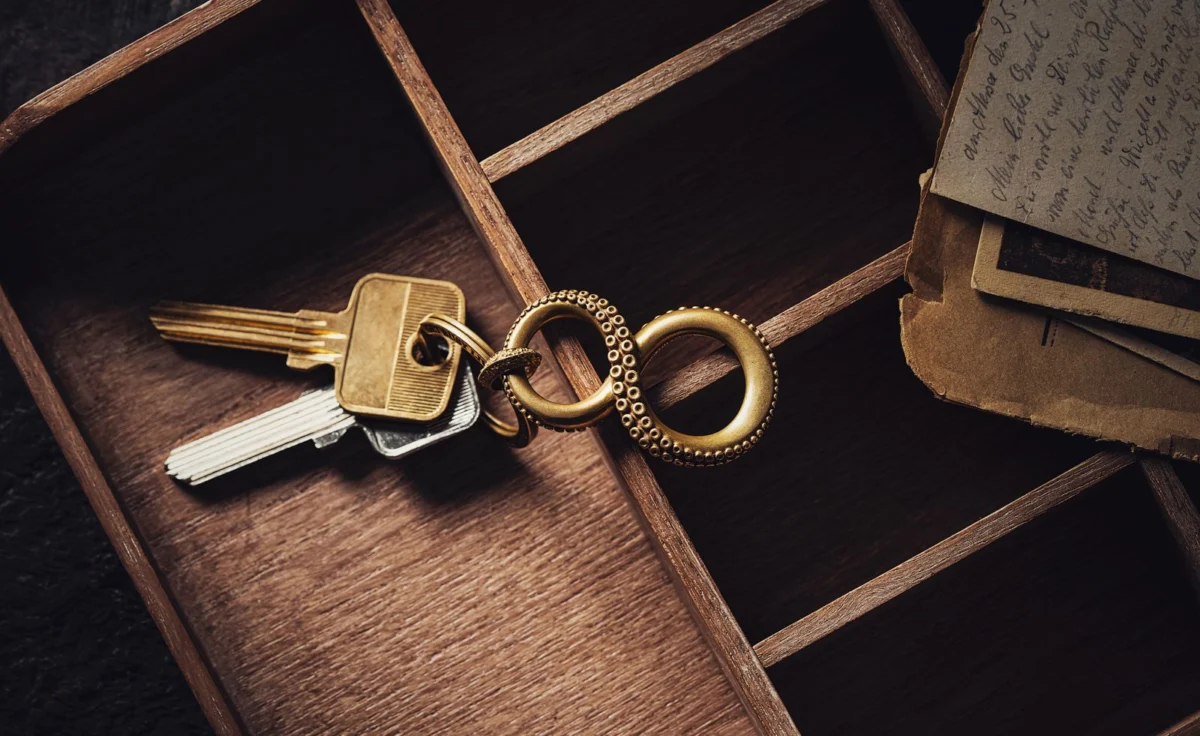
Relay theft and letterbox fishing both target car keys left near the front door. A signal blocking pouch in a back room keeps car keys at night out of reach. Hallway bowls, door hooks, window sills and the parked car put the keys at risk. A two minute lock test at the car proves the storage blocks the signal. The second car key needs the same signal blocking storage, apart from the main key.
Fridges and microwaves, sleep mode fobs, a metal box blocks the key signal question, the range of relay kits and materials block a key signal raise five further questions.
The list below gives four key takeaways on car keys at night.
- Car keys at night belong in a signal blocking pouch or box, away from the front door.
- Relay kits copy a keyless fob signal through walls, windows and doors.
- A lock test at the car proves the storage blocks the signal.
- The spare key needs the same protection as the main key.
Why does the overnight key spot matter?
The overnight key spot matters because thieves steal keyless cars with relay kits and fish keys through letterboxes. Both methods work from outside the house, and both depend on keys sitting near the front door.
A relay kit uses two devices. One device picks up the fob signal through a wall or a window. The second device passes the signal to the car, which unlocks and starts in 20 to 30 seconds. Letterbox fishing uses a rod and a hook to lift keys from a hallway table or a hook.
Which home spots keep car keys secure?
The most secure place for car keys is a signal blocking pouch or box in a room at the back or upstairs. The list below gives four places in order of safety.
- A Faraday pouch or a lined metal box in a back room or an upstairs room, far from outside walls.
- A closed drawer or cupboard in the middle of the house, with the keys inside a signal blocking pouch.
- A home safe made of steel, which blocks the signal when the door closes fully.
- A hidden spot away from doors and windows, which stops letterbox fishing but not relay theft.
Distance alone slows relay theft, while a signal blocking pouch stops the fob signal leaving the room at all.
Which spots put car keys at risk?
A hallway bowl, a hook by the door, a window sill and the parked car put car keys at risk overnight. The list below gives five risky spots with the threat each spot brings.
- A bowl or table in the hallway sits within reach of a relay kit outside the front door.
- A hook beside the door invites letterbox fishing with a rod and a hook.
- A window sill shows the keys to anyone passing and keeps the fob close to the street.
- Keys left in the parked car hand the vehicle to anyone who breaks a window.
- A coat pocket on a hallway peg keeps the fob as close to the door as a bowl.
Every risky spot shares one feature, a short distance between the keys and the outside of the house.
How do you check the key storage works?
To check the key storage, seal the key inside, stand next to the car and pull the door handle. The list below gives the four steps.
- Put the key inside the pouch or box and close the seal or lid fully.
- Carry the closed pouch or box to the car and stand beside the driver door.
- Pull the door handle or press the start button with the key still sealed.
- Read the result, since a car that stays locked shows the storage blocks the signal.
Pouches wear at the folds, so a repeat test every few months shows the lining still blocks the key signal.
Where should the spare key sit?
The spare key sits in a second signal blocking pouch, in a different room from the main key. A spare fob sends the same signal as the main key, so a relay kit unlocks the car with either key.
Separate storage also means a single break-in rarely takes both keys. ADC Locksmith Liverpool cuts and codes a second car key at the car, so the spare stays a safe backup rather than a risk.
What else keeps a keyless car safe overnight?
Fridges and microwaves, sleep mode fobs, metal boxes, relay range and blocking materials raise five further questions about car keys at night. The five questions below answer each topic.
Frequently asked questions
Does a fridge block a car key signal?
No, a fridge does not block a car key signal reliably, because the door seals and plastic parts let the signal out.
Cold and condensation also shorten the fob battery life, and a microwave risks damage to the keys if someone switches the oven on.
Do keyless fobs have a sleep mode?
Yes, many newer keyless fobs switch the signal off after the key stays still for about a minute.
The owner handbook lists a motion sensor or a button sequence that turns keyless entry off for the night.
Does a metal box block the key signal?
Yes, a metal box blocks the signal when the lid closes metal to metal with no gap.
A lock test shows the result for each tin, since not every lid closes tight enough to prove a metal box blocks the key signal every time.
How far does a relay kit reach?
A relay kit picks up the signal from car keys a few metres away, through walls, doors and windows.
A back room or an upstairs room adds distance, and a signal blocking pouch removes the signal for a relay kit to find.
Which household materials block a key signal?
Conductive metals block a key signal, with aluminium, copper and steel the common household options.
A lock test ranks foil, tins and lined fabric by how well the materials block a key signal. A tested signal blocking pouch away from the front door stays the simplest choice for car keys at night.
Based in Liverpool and still stuck?
ADC Locksmith Liverpool repairs, programs and replaces car keys at the roadside across Liverpool and Merseyside, usually on the same day. Craig Evans holds SERMI approval and a 5.0 rating from over 300 Google reviews. A call to 07731 544220 brings a fixed price before Craig travels.
Call 07731 544220