An immobiliser light flashing slowly with the car locked is normal, and a fast flash with the ignition on means the car has not recognised the key, which a spare key or a new fob battery clears in most cases.
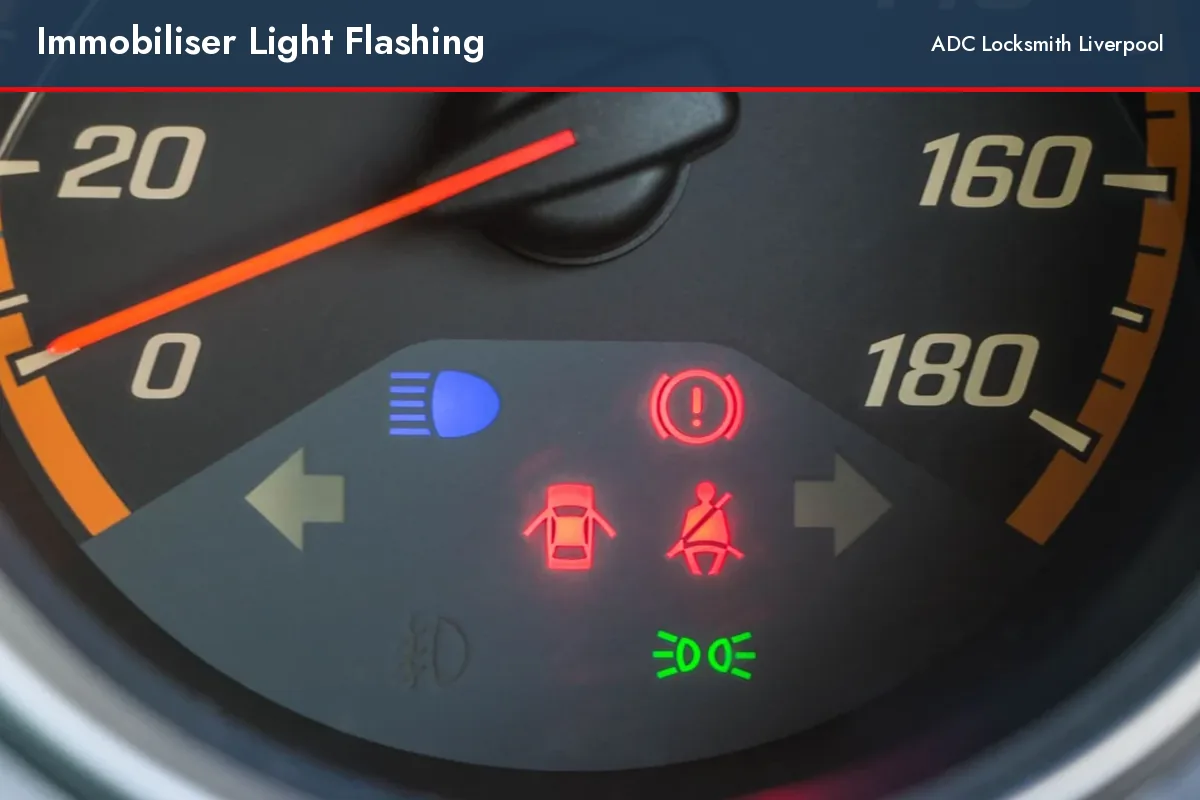
The immobiliser light is the security indicator on the dashboard that shows the state of the immobiliser, the system that blocks the engine until the car reads the correct code from the chip in the key. The light has two jobs. With the car locked it flashes slowly to show that the system is armed. At the start it goes out once the key is accepted, and it flashes fast or stays on when the key is refused. The pattern and the position of the ignition separate a normal light from a fault. Five patterns cover every case, five checks at the car clear the simple faults, and six causes explain the rest. A key is recoded at the car in 30 to 60 minutes.
A blinking light, a reset, a car that does not start, the anti theft light, the light after locking, the battery, the symbol, the Ford Focus, the Renault Clio, the Nissan, a fob battery, a car battery change, a locksmith, the time for recoding and driving raise fifteen further questions.
The list below gives four key takeaways on an immobiliser light flashing.
- A slow flash with the ignition off and the car locked shows an armed system and no fault.
- A fast flash with the ignition on, and an engine that does not run, means the key was refused.
- A spare key that starts the car places the fault in the first key.
- An auto locksmith tests the chip and recodes the key at the car, and a fault in the wiring or the control unit goes to an auto electrician.
What does a flashing immobiliser light mean?
A flashing immobiliser light means the system is armed where the car is locked, and the key was refused where the ignition is on. The table below matches five patterns of the light to their meaning.
| Pattern | Meaning | Action |
|---|---|---|
| Slow flash, car locked | Immobiliser armed, no fault | None |
| Light goes out within seconds of ignition on | Key accepted | None |
| Fast flash, ignition on, engine does not run | Key refused | Try the spare key |
| Light stays on without a flash | Key not read, or a fault in the system | Work through the five checks |
| Flash while the engine runs | Key signal lost after the start, or low voltage | Test the spare key before the next start |
Rows one and two are a healthy car. Rows three to five are an immobiliser light flashing as a warning, and the checks further down apply to them.
Is a flashing light normal when parked?
A flashing light is normal when parked, since the slow flash shows that the immobiliser armed itself once the key left the car.
The immobiliser light flashing every few seconds on a locked car is part of the design. The flash tells a thief that the engine is blocked, and it stops when the car is opened and the key is read. The light is a single LED that draws too little current to flatten a healthy battery, even over weeks. Three things mark the normal pattern, a steady rhythm, the ignition off, and a light that goes out within seconds of the next start. A light that changes rhythm, or stays on with the ignition on, is no longer the parked pattern.
Which 5 checks stop the light flashing?
Five checks stop the light flashing at the start, and the spare key is the first and the most telling. The list below gives the five checks for an immobiliser light that flashes with the ignition on.
- Try the spare key, since a spare that starts the engine places the fault in the first key.
- Fit a new coin cell in the key fob of a keyless car, usually a CR2032.
- Remove other chipped keys and fobs from the keyring, since a second chip confuses the reader.
- Charge or jump start a car battery under 12 volts, then lock and open the car once with the key.
- Leave the ignition off for 10 to 15 minutes after several failed starts, then try once more.
The pause in the last check lets a temporary lockout clear. An immobiliser light flashing after all five checks has a cause inside the key or the car.
Why does the immobiliser light keep flashing?
The immobiliser light keeps flashing because the code from the key is not sent, not received or not accepted by the car. The list below gives six causes in order of frequency.
- A transponder chip cracked by a drop, or soaked by water, sends no code.
- A flat battery in the fob stops a keyless car sensing the key at normal range.
- A key that lost its coding, often after a car battery change, sends a code the car no longer holds.
- A weak car battery drops the voltage during the key check and spoils the reading.
- A failed antenna ring around the ignition barrel receives no code from a good key.
- Water or corrosion in the wiring or a control unit breaks the line between the reader and the engine computer.
The first three causes sit in the key and are the common ones. The last three give the same immobiliser light flashing with every key, which is how a fault in the car is told from a fault in the key.
Why is the light flashing while driving?
The light is flashing while driving because the car lost the signal of the key after the start, or the voltage of the car dipped.
The immobiliser checks the key at the start and does not stop a running engine, so the car keeps going. A weak fob battery is the usual reason on a keyless car, and the light settles once a new cell is fitted. A tired car battery or a charging fault brings the same flash, often with a radio that cuts out for a moment. On some cars the alarm uses the same light to report that it was triggered while the car was parked. An immobiliser light flashing on the move is a warning about the next start. The spare key is tested, and the car battery is checked, before the engine is switched off far from home.
Who fixes a flashing immobiliser light?
An auto locksmith fixes a flashing immobiliser light where the key is at fault, and an auto electrician or a main dealer repairs the antenna ring, the wiring and the control unit.
The work happens at the car with a diagnostic tool on the OBD port. The locksmith reads the fault codes, tests the chip in each key, recodes or replaces the key that fails and starts the engine before leaving. ADC Locksmith Liverpool carries out immobiliser key coding in Liverpool from £60 with no call out fee and no VAT, usually within the hour, 24 hours a day. Craig Evans holds SERMI approval, the accreditation for access to the security data of the car maker, and checks photo ID and proof of ownership first. A scan that places the fault in the car is reported to the driver with the fault codes.
What does fixing the light cost?
Fixing the light costs £60 to £150 where a key is recoded, and £2 to £5 where a fob battery was the cause. The table below compares five fixes for an immobiliser light flashing as a warning.
| Fix | Typical UK price | Who does it |
|---|---|---|
| New key fob battery | £2 to £5 | The driver |
| Key recoded to the immobiliser | £60 to £150 | Auto locksmith |
| New chipped key cut and programmed | £80 to £250 | Auto locksmith |
| Antenna ring replaced | £50 to £150 | Auto electrician |
| Engine control unit repaired | £150 to £400 | Electronics specialist |
The slow flash on a parked car costs nothing, since nothing is wrong. ADC Locksmith Liverpool gives a fixed price on the call, before travel.
What else do drivers ask about immobiliser lights?
Drivers ask about immobiliser lights in fifteen further questions on an immobiliser light flashing. A blinking light, a reset, a car that does not start, the anti theft light, the light after locking, the battery, the symbol, the Ford Focus, the Renault Clio, the Nissan, a fob battery, a car battery change, a locksmith, the time for recoding and driving are the fifteen topics, and the questions below answer each one.
Frequently asked questions
What does a blinking immobiliser light mean?
A blinking immobiliser light means the system is armed with the car locked, or the key was refused at the start.
The speed of the blink and the position of the ignition tell the two apart.
How does an immobiliser reset?
An immobiliser reset takes 10 to 15 minutes on many cars, with the key left at ignition on.
The steps to bring a car out of anti theft mode with the key are set out in full.
Does an immobiliser stop a car starting?
Yes, an immobiliser stops a car starting where the key is refused, by blocking the starter, the fuel or the ignition.
The guide to a car immobiliser not working covers the repair.
How does the anti theft light stop blinking?
The anti theft light stops blinking at the start once the car reads a key it accepts.
The slow blink on a locked car is by design and stays.
Why is the red light blinking after locking the car?
The red light is blinking after locking the car because the alarm and the immobiliser are armed.
The light warns thieves off and goes out when the car is opened with the key.
Does a flashing immobiliser light drain the battery?
No, a flashing immobiliser light does not drain the battery, since the LED draws a tiny current.
A healthy car battery feeds the light for weeks.
What does the immobiliser light look like?
The immobiliser light looks like a car with a key or a padlock inside, a key outline, or a plain red LED.
The handbook shows the version fitted to each model.
Why is the immobiliser light flashing on a Ford Focus?
The immobiliser light is flashing fast on a Ford Focus where the car has not read the chip in the key.
The spare key is the first test, and the car battery is the second.
Why is the immobiliser light flashing on a Renault Clio?
The immobiliser light is flashing at the start on a Renault Clio where the key or the card was refused.
A slow flash with the car locked is normal on the Clio, as on other cars.
What does the flashing key light mean on a Nissan?
The flashing key light on a Nissan is the security indicator of the immobiliser.
The guide to the Nissan security indicator light gives the five steps.
Does a new key fob battery stop the light flashing?
Yes, a new key fob battery stops the light flashing on a keyless car with a weak fob.
A bladed key carries a chip that draws no power, so its battery changes nothing.
Does the light flash after a car battery change?
Yes, the light flashes after a car battery change on some cars, since the keys lose their coding.
The keys are then programmed again at the car.
Does a locksmith fix a flashing immobiliser light?
Yes, a locksmith fixes a flashing immobiliser light where the key is at fault, with the chip tested and the key recoded at the car.
ADC Locksmith Liverpool starts from £60 with no call out fee.
How long does recoding a key take?
Recoding a key takes 30 to 60 minutes at the car.
Smart keys take a little longer than a basic transponder key.
Is a car safe to drive with the light flashing?
Yes, a car is safe to drive with the light flashing, since the immobiliser does not stop a running engine.
The risk is the next start, so the spare key is tested before the engine is switched off.
Based in Liverpool and still stuck?
ADC Locksmith Liverpool repairs, programs and replaces car keys at the roadside across Liverpool and Merseyside, usually on the same day. Craig Evans holds SERMI approval and a 5.0 rating from 341 Google reviews. A call to 07731 544220 brings a fixed price before Craig travels.
Call 07731 544220